Setting up ads helps publishers monetize their content, but revenue growth is achieved by continuous performance-based ad optimization. There are various technology partners that play a significant role in that; revenue optimization vendors is one such category of partners.
Given the challenges that threaten publishers’ revenue-generating ability such as tracking prevention, ad blocking, and banner blindness, they seek these revenue optimization vendors—to help them maximize revenue by optimizing their ad layouts and demand stack.
While doing a Google search on “how to improve ad revenue,” I stumbled upon AdPushup—one of the leaders in the ad optimization space. Following this, I did my research and tested the platform. Basis that, here is a post, I’m sharing my learning about AdPushup.
What is AdPushup?
Here are my findings about the company:
Launched in 2014, the platform specializes in optimizing ad revenue for publishers and bloggers (websites that use display advertising to generate revenue). AdPushup helps publishers create high-conversion ad layouts based on split testing data executed using its automated A/B testing technology. It claims to increase the publisher’s ad revenue by 30 to 40% on average.
Apart from revenue optimization, it also works as a demand aggregator, with 50+ premium demand partnerships, including Pubmatic, AppNexus, Criteo, Rubicon, and many others, helping publishers access more than 30,000 advertisers for their ad inventory.
Upon researching, I also found there are a lot of other players in the market (eg. Ezoic and MonetizeMore) who focus more on publishers who already have a Google AdX account. Unlike them, AdPushup is platform agnostic and has a better setup in place to drive revenue optimization for AdSense publishers. It is also a Google NPM partner and an IAB member.
How Does AdPushup Improve Ad Revenue?
AdPushup’s product stack includes header bidding, AdBlock recovery, AMP conversion & monetization, ad mediation, ad layout optimization, and a variety of innovative ad formats.
I’m going to explain each of these briefly and their benefit for publishers:
- Header bidding: Helps publishers fetch the highest bids and fill rates for their ad inventory. The setup enables both advertisers and exchanges to bid on the inventory in real-time, thereby increasing bid competition, and hence overall ad revenue.
- AdBlock recovery: Publishers are losing money due to ad blockers being used by more than a quarter of users across the web. By using ad-reinsertion technology, AdPushup serves ads that meet the Acceptable Ads Standard to AdBlock users, these ads meet the highest UX standards and help publishers recover ad blocked revenue.
- AMP conversion & monetization: Besides revenue optimization, the platform allows publishers to convert standard HTML web pages their AMP-enabled counterparts. It also enables advanced monetization to make the most out of mobile traffic.
- Ad mediation: Optimizes revenue between closed networks and non-RTB environments where real-time auctions do not exist. The tool analyzes historical bid performance to evaluate network performance and award impressions to those likely to bid the highest.
- Ad layout optimization: Allows to create multiple ad layout variants using the click-and-point visual ad manager to find the most effective variant. Constant layout testing running in the background helps improve CTR, viewability, and ad performance.
- Innovative ad formats: Offers a suite of ad formats that again help attain better viewability and CTR improving the value of publisher’s ad inventory. The ad styles include in-view, in-image, sticky, docked, in-content, and native ads.
Setting Up AdPushup
AdPushup has a simple, two-step onboarding process.
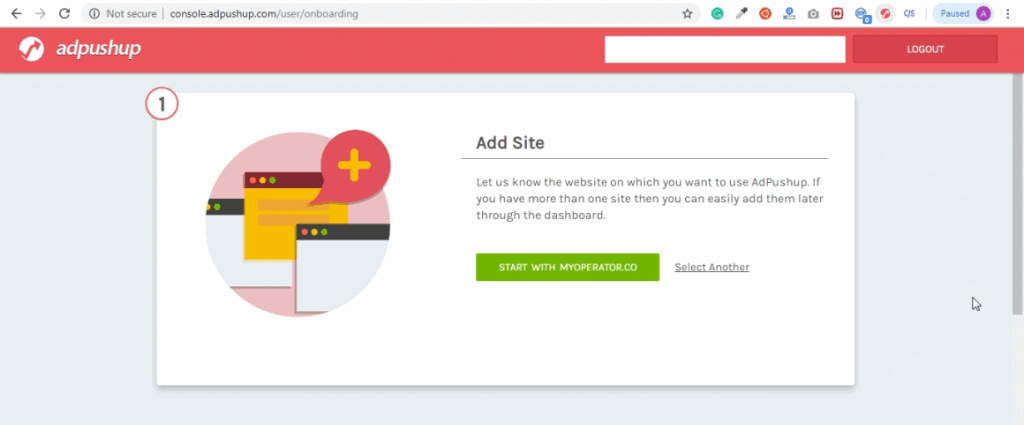
The best part is that publishers don’t require technical knowledge to get started; most other platforms have a complex setup which requires technical expertise and more time.
- First, publishers need to add their website domain in the AdPushup console.
- Second, they need to add the single line JavaScript code in their website header.
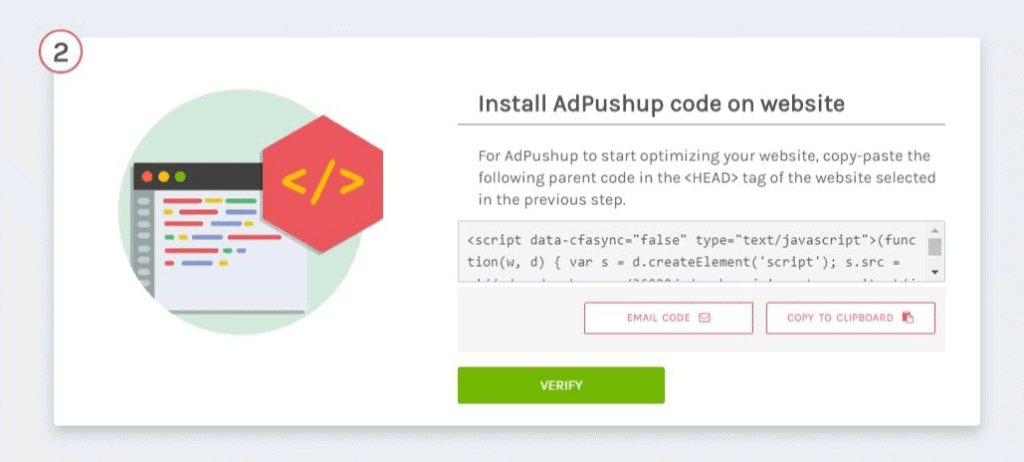
Using the Interface and Data
The AdPushup interface is streamlined and easy to use. It allows publishers to:
- Create ad layouts variations
- Monitor experiments and optimizations
- Create customized ad performance reports
The interface may require a little bit of learning to understand for first-time users before becoming hands-on; as needed in the case of any new tool we learn and use.
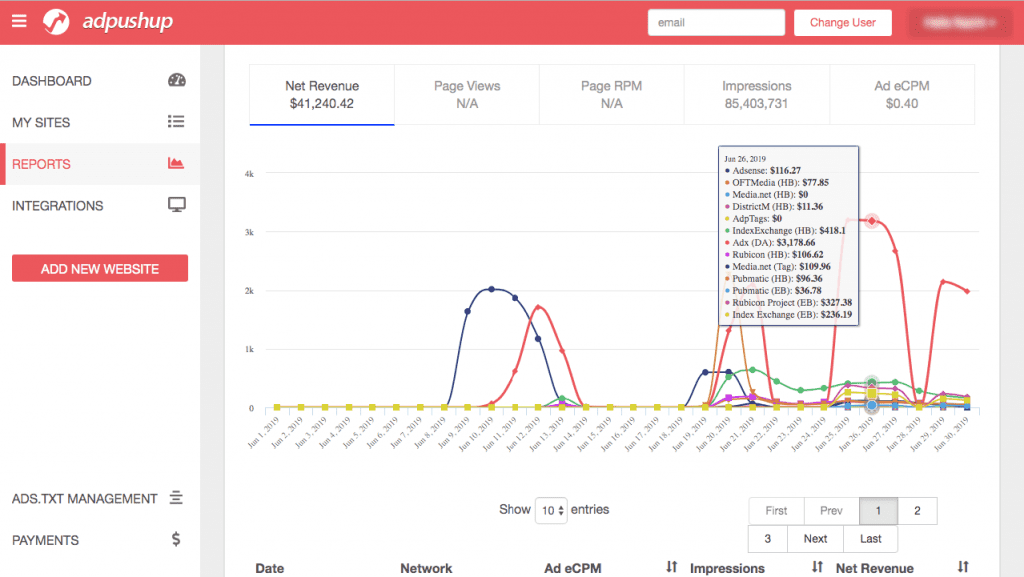
Speaking of reporting, AdPushup does a pretty decent job. Generating a report is fairly easy and a matter of few clicks.
The fully-automated reporting comes with nine dimensions and eight filters. Google Analytics integration with the reporting, however, is currently a manual process.
Value Additions and Key Points
- AdPushup is a managed platform and provides a dedicated account manager.
- Experts at the ad ops team take care of all the legwork on the publisher’s behalf.
- AdSense optimization and Google policy compliance is also managed by the team.
- Offers free AdsTxt manager tool for publishers to visually manage their ads.txt in bulk.
- The platform is compatible and equally focussed on both AdSense and AdX publishers.
- Has a comprehensive blog, regularly updated with industry insights for publishers.
- Requires publishers to have minimum $1000 monthly ad revenue to onboard.
- Follows revenue-share pricing model with NET-45 payments.
Conclusion
AdPushup emphasizes on enhancing ad revenue by optimizing ad performance. According to the case studies on the website, existing publishers CCNA7 and SummitPost achieved a 5X revenue uplift and 1.5X increase in page CTR respectively, by using AdPushup.
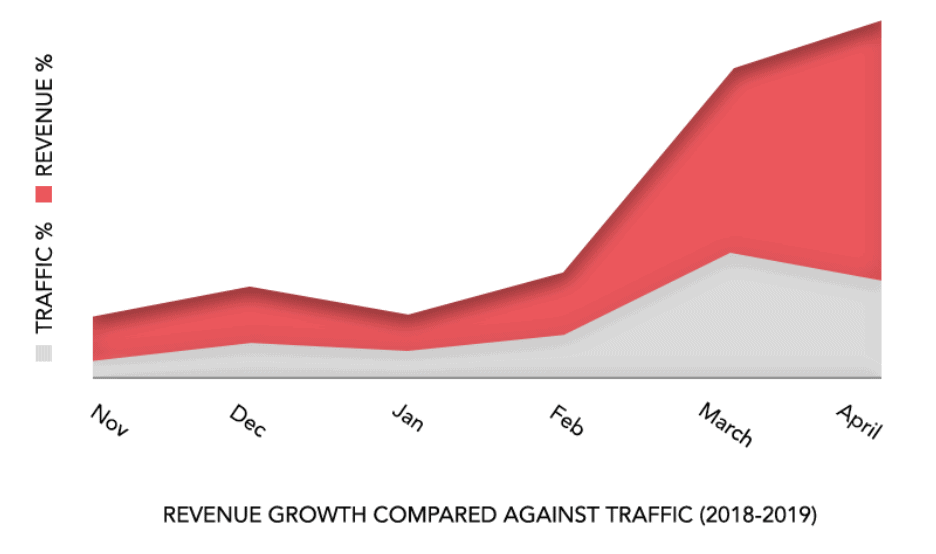
Recently, AdPushup has released its new version: AdPushup 2.0, improving its feature stack and offerings. Also, being a managed platform, it allows publishers to focus on creating content while it manages all the ad-related experiments, optimizations, and ad operations.
Planning to give AdPushup a try? You can get started here.
Original post: AdPushup Review: How it Helps Publishers Optimize their Ad Revenue
* This article was originally published here